





Scaling & Root Planing
The initial stage of treatment is usually a thorough cleaning that may include scaling to remove plaque and tartar deposits beneath the gum line.
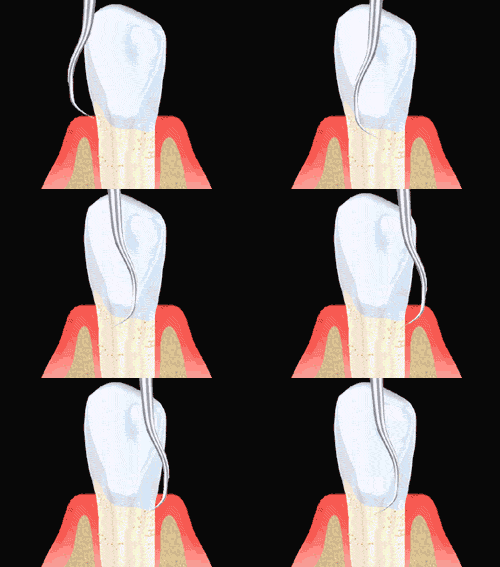
The tooth roots may also be planed to smooth the root surface allowing the gum tissue to heal and reattach to the tooth. In some cases, the occlusion (bite) may require adjustment.
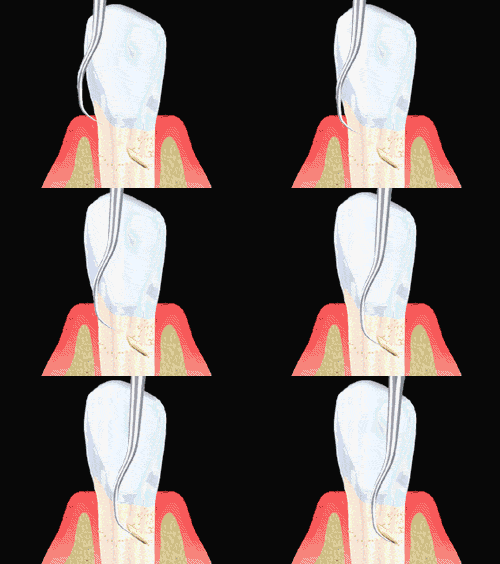
Antibiotics or irrigation with anti-microbials (chemical agents or mouth rinses) may be recommended to help control the growth of bacteria that create toxins and cause periodontitis. In some cases, yourhygienestmay place antibiotic fibers in the periodontal pockets after scaling and planing. This may be done to control infection and to encourage normal healing.
When deep pockets between teeth and gums are present, it is difficult for your hygienist to thoroughly remove plaque and tartar. Patients can seldom, if ever, keep these pockets clean and free of plaque. Consequently, surgery may be needed to restore periodontal health.
Bite Adjustment
A bite is considered to be healthy when all or most of the teeth are present and not destroyed by normal daily usage.
It is destructive when teeth show wear, looseness or when TMJ (jaw joint) damage is seen. Bite therapy helps restore a bite that can function without damage and destruction. The therapy may include:
- Reshaping the biting surfaces of the teeth and eliminating spots of excessive pressures where the teeth are brought into contact. This is done by carefully dividing bite pressures evenly across all of the teeth.
- Bite splint therapy using a custom-fitted and adjusted plastic bite guard to keep the teeth apart, day, night, or both.
- Braces to reposition mal-aligned or drifted teeth.
- Replacement of old, worn out, or damaged fillings.
- Reconstruction of badly worn and damaged teeth.